
Mosquito Species in New Jersey
Most mosquitoes look frustratingly similar until you know what to look for. In New Jersey, bite time, habitat and behavior can be just as useful as color. This guide helps you narrow down what you may be seeing without pretending every phone photo can be identified to species.
Rutgers lists 63 mosquito species sampled in New Jersey. You do not need to learn all 63. A smaller group explains most of the mosquito situations homeowners are likely to notice.
See the Rutgers state list ↗You can learn a lot before you know the exact species.
Look at the markings. Also note when it bites. Note where you are standing. Note what kind of water is nearby. Some mosquitoes are distinctive. Others—especially similar Culex species—really do require a microscope or lab work to separate with confidence.
Black + bright white markings
Strong white bands are on the legs. A single pale stripe runs down the thorax. These point to the Asian tiger mosquito. Daytime biting is a clue. Small containers are a clue too.
Explore → 02Plain brown + dusk/night
A mostly plain brown mosquito may be in the Culex group. Look for it around dusk. Look near storm drains. Look near stagnant organic water. You often cannot tell the exact species from a casual photo.
Explore → 03Explodes after flooding
A sudden wave across the area can follow heavy rain or flooding. It can point to floodwater mosquitoes such as Aedes vexans. It may not point to a container source in one backyard.
Explore → 04Coastal / salt-marsh pressure
Hard coastal biting can follow high tides. It can also follow marsh flooding. It can involve salt-marsh species such as Aedes sollicitans. These mosquitoes may travel well beyond the marsh.
Explore → 05Wooded containers / tree holes
Tree holes can support Aedes triseriatus and Aedes japonicus. Shaded tires can too. Natural containers can too. These can overlap with suburban container mosquitoes.
Explore → 06Wetlands / swamp ecology
Some key NJ mosquitoes are tied to special wetlands. They may rarely come from the backyard itself. Culiseta melanura and Coquillettidia perturbans are good examples.
Explore →The New Jersey mosquitoes worth knowing first
These are not the only species in the state. They are a useful mix. The mix includes container breeders. It includes floodwater mosquitoes and house mosquitoes. It includes coastal species and tracking species. They explain a lot of what New Jersey residents see.
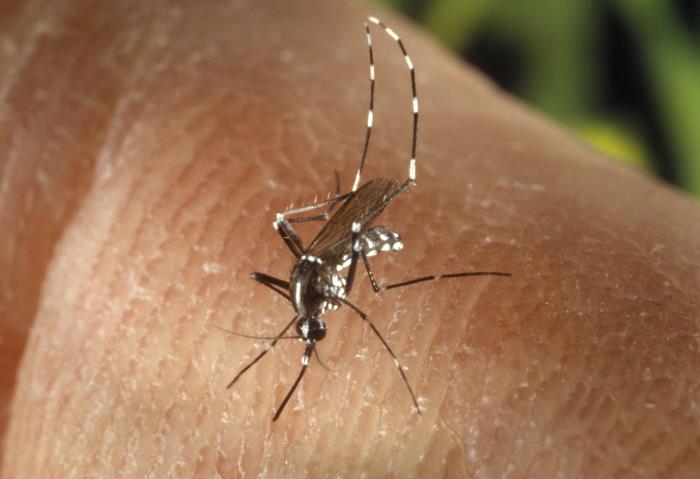
Asian Tiger Mosquito
Aedes albopictusThis backyard species is the easiest to spot. It has a black body. It has white leg bands. It has a single pale stripe along the top of the thorax.
Open profile →Aedes japonicus
Aedes japonicusThis is an invasive container mosquito. It was first found in North America in 1998. The first finds came from New Jersey and New York collections.
Open profile →Eastern Treehole Mosquito
Aedes triseriatusThis species lives in woods and containers. It is tied to tree holes and shaded tires. Adults have dark legs with no bands. They have silvery scales along the thorax sides.
Open profile →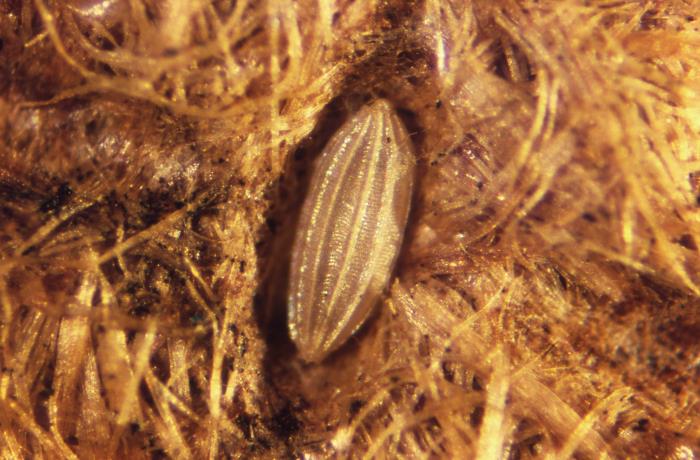
Inland Floodwater Mosquito
Aedes vexansThis is a major nuisance mosquito. Its eggs wait in flood-prone soil. The eggs hatch when water returns. This helps explain area surges after rain.
Open profile →Eastern Saltmarsh Mosquito
Aedes sollicitansThis is a brightly marked coastal pest. It comes from salt-marsh flooding. Adults can move inland from marshes where they lay eggs.
Open profile →
Northern House Mosquito
Culex pipiensThis is a plain brown house mosquito. It is linked to catch basins and stagnant water. It is linked to water rich in organic matter.
Open profile →Culex restuans
Culex restuansThis NJ Culex is widespread. It uses containers and catch basins. It uses temporary ground water. It also uses polluted pools.
Open profile →Culex salinarius
Culex salinariusThis Culex leans coastal. It is linked to fresh or brackish water. It is linked to plants that grow out of water. It is linked to decaying plants too.
Open profile →
Culiseta melanura
Culiseta melanuraThis is a special swamp mosquito. It is key to eastern equine encephalitis among birds. Its young mosquitoes (larvae) live in dark root crypts.
Open profile →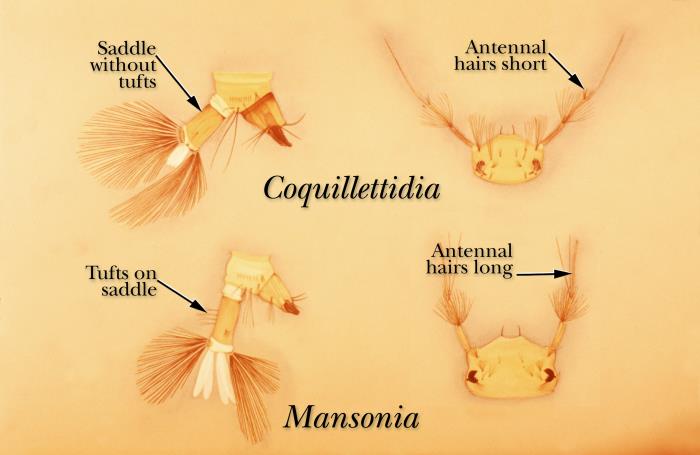
Coquillettidia perturbans
Coquillettidia perturbansThis is a wetland mosquito. Its young mosquitoes are unusual. They attach to underwater plant roots and stems. They do this to get oxygen.
Open profile →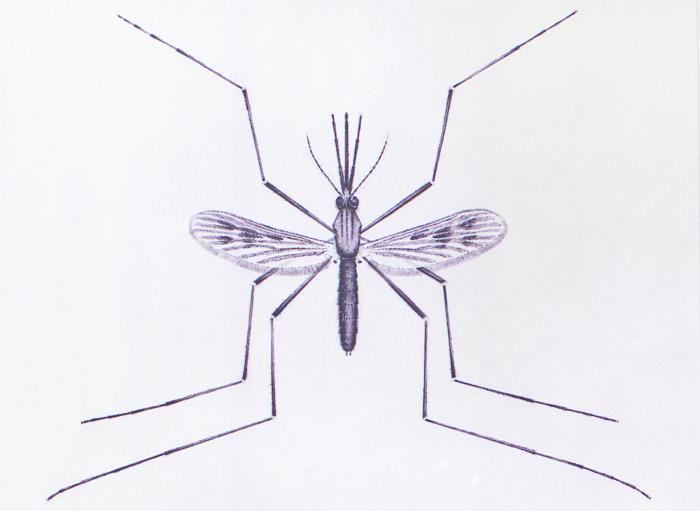
Common Malaria Mosquito
Anopheles quadrimaculatusThis is a large dark Anopheles. It has four dense patches of scales on each wing. Its young mosquitoes lie near-parallel to the water surface.
Open profile →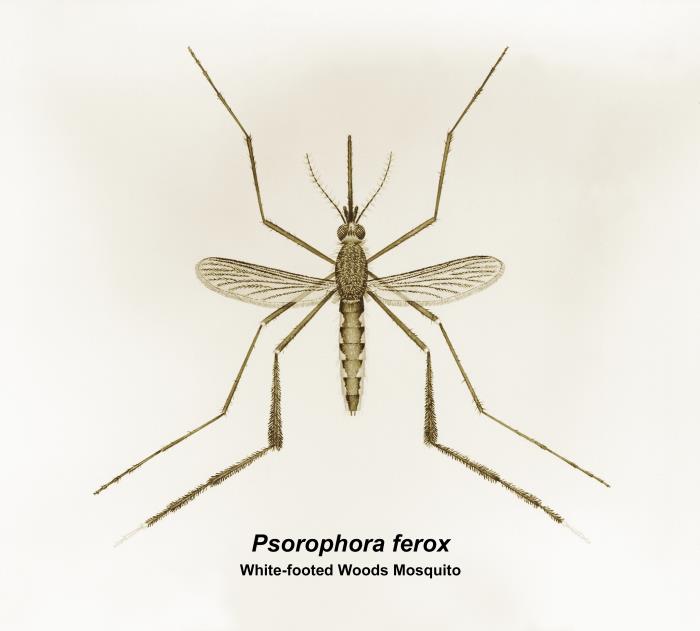
Dark Rice Field Mosquito
Psorophora feroxThis is a strong floodwater species. It is often linked to shaded temporary pools. It is linked to wooded flood sites. It seeks hosts in an aggressive way.
Open profile →Learn the mosquito families first. Worry about each species later.
Aedes
The largest group on the NJ list. It includes container breeders. It includes tree-hole mosquitoes. It includes salt-marsh mosquitoes. It includes floodwater species. Eggs are often laid where they can live through dry times. The eggs hatch when water floods the spot.
Culex
These are house-mosquito relatives. They often use stagnant water. They use catch basins and containers. They use water rich in organic matter. Adult females often stand out most from dusk into the night.
Anopheles
This genus is easy to spot. Its adults have long palps. Its young mosquitoes lie nearly parallel to the water surface. They do not hang from a long siphon. NJ includes several Anopheles species.
Culiseta
Less familiar to homeowners. Culiseta melanura is key in EEE ecology. It keeps virus cycles going among birds. It does this in the swamp places where they live.
Coquillettidia
Its young mosquitoes and pupae are unusual. They attach to water plants to get oxygen. Cq. perturbans is strongly linked to plants that grow out of water. Those plants are in freshwater wetlands.
Psorophora
Often strong, aggressive floodwater mosquitoes. Several species occur in NJ, including Psorophora ferox.
Toxorhynchites
This is the oddball. Adults do not take blood meals. Its young mosquitoes prey on other young mosquitoes. One species is on the NJ list.
Uranotaenia + Wyeomyia
These are special mosquitoes. They have very different hosts. They like very different places to live. They remind us why a “mosquito” is not one single kind of backyard insect.
All 63 mosquito species sampled in New Jersey
The full list below comes from Rutgers. It comes from the Center for Vector Biology. Scientific names can change over time. Records can change too. So use the Rutgers list for the most current state reference.
Aedes (32)32 species
- Aedes abserratus
- Aedes albopictus
- Aedes atlanticus
- Aedes atropalpus
- Aedes aurifer
- Aedes canadensis canadensis
- Aedes cantator
- Aedes cinereus
- Aedes communis
- Aedes dorsalis
- Aedes dupreei
- Aedes excrucians
- Aedes fitchii
- Aedes flavescens
- Aedes grossbecki
- Aedes hendersoni
- Aedes implicatus
- Aedes infirmatus
- Aedes intrudens
- Aedes japonicus japonicus
- Aedes mitchellae
- Aedes provocans
- Aedes punctor
- Aedes sollicitans
- Aedes spencerii spencerii
- Aedes sticticus
- Aedes stimulans
- Aedes taeniorhynchus
- Aedes thibaulti
- Aedes triseriatus
- Aedes trivittatus
- Aedes vexans
Anopheles (8)8 species
- Anopheles atropos
- Anopheles barberi
- Anopheles bradleyi
- Anopheles crucians
- Anopheles earlei
- Anopheles punctipennis
- Anopheles quadrimaculatus
- Anopheles walkeri
Culex (6)6 species
- Culex erraticus
- Culex pipiens
- Culex restuans
- Culex salinarius
- Culex tarsalis
- Culex territans
Culiseta (4)4 species
- Culiseta inornata
- Culiseta melanura
- Culiseta minnesotae
- Culiseta morsitans
Coquillettidia (1)1 species
- Coquillettidia perturbans
Orthopodomyia (2)2 species
- Orthopodomyia alba
- Orthopodomyia signifera
Psorophora (7)7 species
- Psorophora ciliata
- Psorophora columbiae
- Psorophora cyanescens
- Psorophora discolor
- Psorophora ferox
- Psorophora howardii
- Psorophora mathesoni
Toxorhynchites (1)1 species
- Toxorhynchites rutilus septentrionalis
Uranotaenia (1)1 species
- Uranotaenia sapphirina
Wyeomyia (1)1 species
- Wyeomyia smithii
Prefer to leave it to a crew? Here is how mosquito control in New Jersey works when Bite Back treats a yard.
The next question is simple. Can you fix the source yourself?
Keep checking the water and resting areas first. If mosquitoes still make the yard miserable, help is here. Bite Back provides professional mosquito control. It is for New Jersey homes.