
Common Malaria Mosquito
Anopheles mosquitoes look a little different from the Aedes and Culex mosquitoes most homeowners picture. Anopheles quadrimaculatus is historically important, but today the useful part of this page is learning those identification differences.
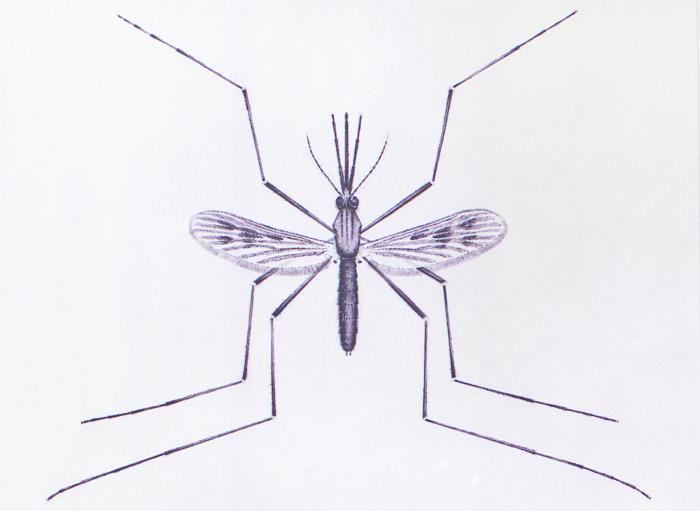
Look for spotted wings and long palps (feelers near the mouth). Look for young ones that lie flat on the water.
Rutgers describes large dark-brown adults. Each wing has four thick patches of scales. CDC keys stress the long palps of female Anopheles. The young ones lie flat on the water. They lack the long breathing tube that Culex has.
A good sample can often be named as Anopheles. Telling close kin in this group apart takes more skill and tools.
Adult identification
Rutgers describes large dark-brown mosquitoes. They have four thick patches of wing scales. Female Anopheles have long palps. The palps are about as long as the proboscis (mouth part).
Larval posture
Anopheles young ones sit flat on the water. Many Culex and Aedes young ones hang down. They hang from a breathing tube.
Habitat
Rutgers describes big water bodies. These are reservoirs, lakes, and canals. They can be swamps with water all year. Plants grow at or above the surface there.
Biting behavior
Female Anopheles seek hosts in the evening or at night, for the most part. CDC notes late-evening and night biting for Anopheles quadrimaculatus.
Historical context
This species group played a big role in malaria spread in the past. That was in the eastern United States. Do not mix up that past with today. It does not mean NJ mosquitoes now carry malaria.
Why exact identification can be difficult
Rutgers describes a group of close kin. Tests by experts may be needed to tell them apart. That is a good place for a home guide to stop guessing.
Culex mosquitoes
Female Anopheles have long palps. Their young ones lie in a distinct way too. CDC PHIL has a clear head chart. It shows how Anopheles and Culex heads differ.
What people usually want to know
Does seeing Anopheles mean malaria is present in New Jersey?
No. Naming a mosquito species does not prove a germ is going around.
How do Anopheles larvae sit in water?
They lie flat on the surface. They do not use the long tube that many other young ones use.
Are the four wing spots enough for an exact ID?
The spots are a good clue for the quadrimaculatus group. But an exact ID of close kin can take lab methods.
Next, ask if you can fix the source yourself.
Keep checking the water and resting areas first. If mosquitoes still make the yard hard to use, Bite Back gives mosquito control for New Jersey homes.