
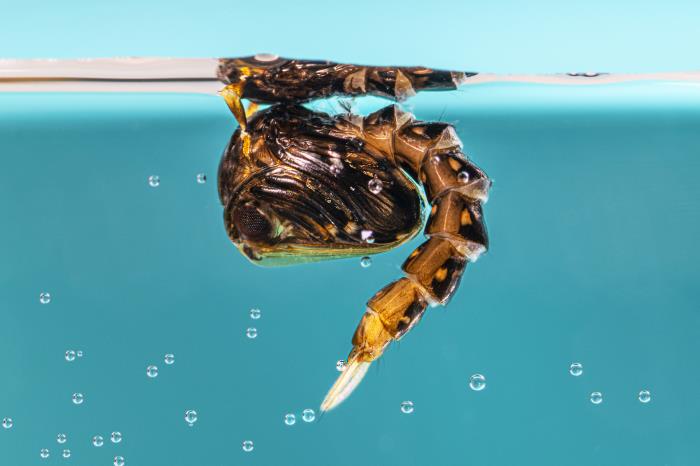
Pupae do not feed, but they are not inactive.
After life as young mosquitoes (larvae), mosquitoes become pupae. Pupae live in the water. They are small and shaped like a comma. People call them “tumblers” because they move fast when disturbed. This is the last stage. Then the adult comes out of the water.
The pupa is the last stage in the water. Then the mosquito flies.
Pupae are strong swimmers. But they do not feed.
A source with pupae is well past fresh eggs.
Young mosquitoes get most of the attention. Their long, wiggling bodies are easy to spot. Pupae are just as important. In one way, they are more urgent.
A pupa is built to change
Mosquito pupae have a small, curved body shape. It looks very different from a young mosquito. They breathe at the top of the water. When disturbed, they flex their abdomen and move fast.
Unlike young mosquitoes, pupae do not feed. Inside its case, the insect is changing into an adult.
Why homeowners often overlook them
Pupae are small, dark and fast. In a dirty bucket or a drain full of leaves, they can be hard to see. Their tumbling can look like bits of trash shifting in the water.
You may find long, wiggling young mosquitoes. You may also find shorter tumblers shaped like a comma. That means you see two stages in the same rich place where mosquitoes live.
A source with pupae has been holding water long enough to matter
Pupae do not show up right after rain. Eggs must hatch first. Young mosquitoes must grow next. So if pupae are there, the water has lasted a long time. It has let mosquitoes grow a lot.
Pupae are a good clue. They help you pick which standing-water spots to fix first.
Taking out the source stops the cycle before flight
If you can, dump the container and fix it for good. Do it before the adults come out. That stops those mosquitoes from joining the ones that fly. Think about where the water will go. Think about whether the container can fill up again.
For water that stays in place, use the right plan. Do not make up your own pesticide use. Read product labels. Follow local advice.
Learn the full mosquito life cycle.
If you can tell eggs, young mosquitoes, pupae, and adults apart, you can see more. You can see where a control plan stops growth.
Two useful follow-ups
Do mosquito pupae bite?
No. Pupae live in the water. They do not feed. The biting female shows up only after the adult comes out.
How can I tell a pupa from a larva?
Pupae are shorter and shaped like a comma. They tumble fast when disturbed. Young mosquitoes are longer and more worm-like. They hold their bodies at the surface in a different way.
Where this information comes from
Jersey Mosquito uses official health, government, and university sources. It adds New Jersey yard context. This article is for learning. It is not medical advice. It is not an official disease-tracking notice.
Want professional mosquito control for your yard?
Jersey Mosquito is the learning side. Bite Back Tick & Mosquito Control treats yards across its New Jersey service area.